The resident creates a pass
One visit or a routine, the visitors, the gate and the expected window. The pass carries a QR code and a six digit PIN.

Your visitors arrive expected. The guard knows who to look for. The estate keeps one clear record of every arrival, from the first pass to the last check-out.
4 inside, 12 expected
Built for Nigerian estates, closes and resident associations. Works on the guard's phone and the administrator's laptop.
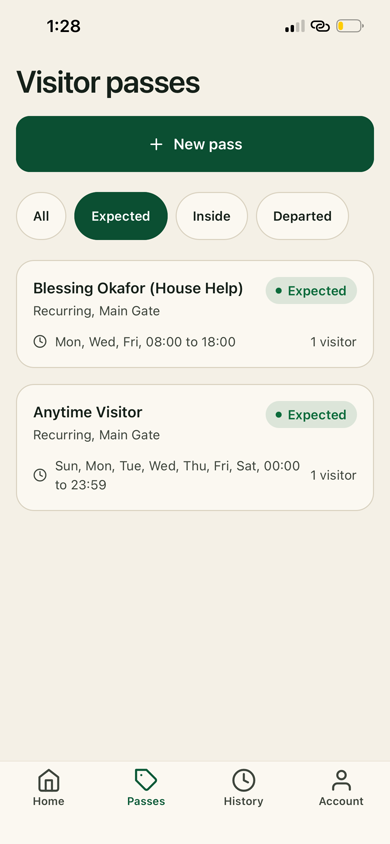
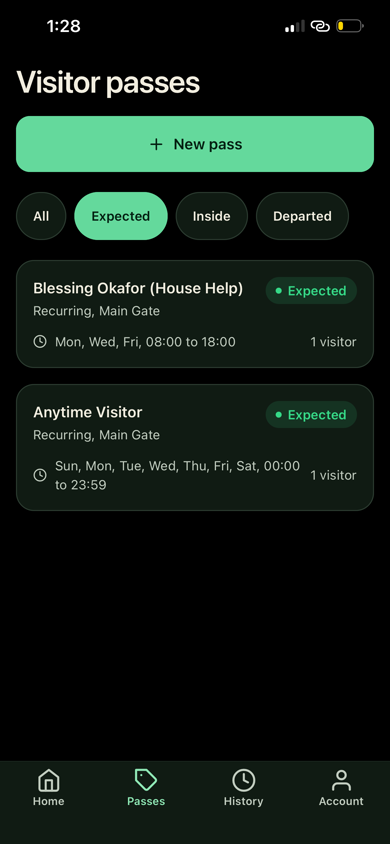
Your visitors, in your pocket.
A Nigerian estate is usually a gated community: a gatehouse, internal streets, shared services and a residents' association. The product is built for how that community runs.


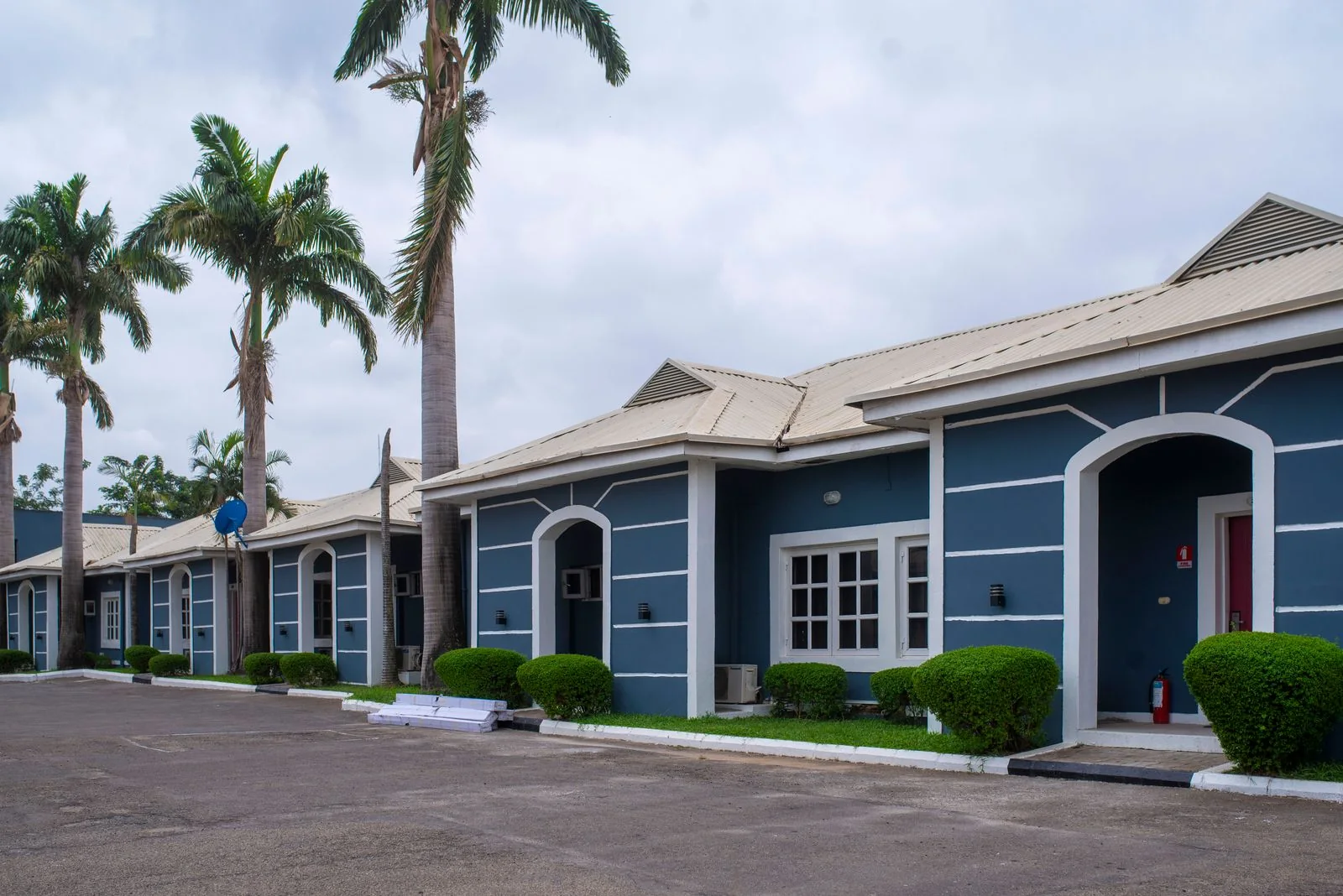
The gate, the lane and the homes, the same structure the administrator builds in the product. Every pass and gate event is recorded against it.
An illustrated garden estate: six homes around a lawn and a pond, a gatehouse with a lifting barrier, and a visitor pass for Ms. Fatima Yusuf at the main gate.
Four quiet steps, each recorded against the community, the unit and the gate.
One visit or a routine, the visitors, the gate and the expected window. The pass carries a QR code and a six digit PIN.
They open the link, show the code at the gate, or press Arrived to tell the resident they are outside.
The guard sees the host, the apartment or block, the party size and the window. The PIN admits everyone the pass expects.
Check-in and check-out become an access event. The resident sees their own history, the administrator sees the community history.
The same pass looks different to the three people who need it, and each sees only what their part of the job needs.
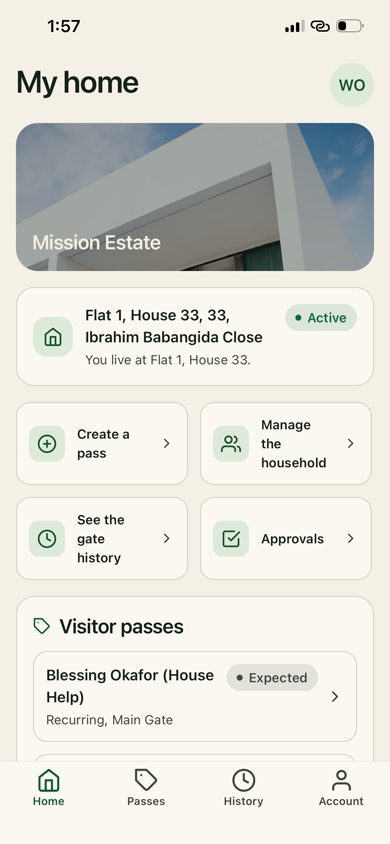
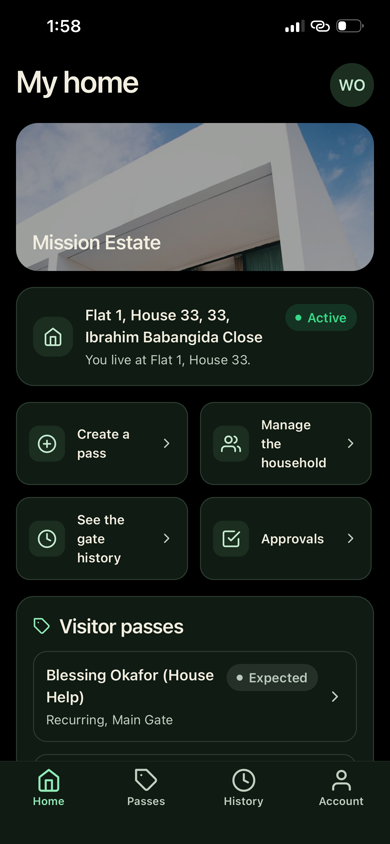
For residents
Create a pass, share the link, and see the people you are expecting. Manage the household without calling the office.
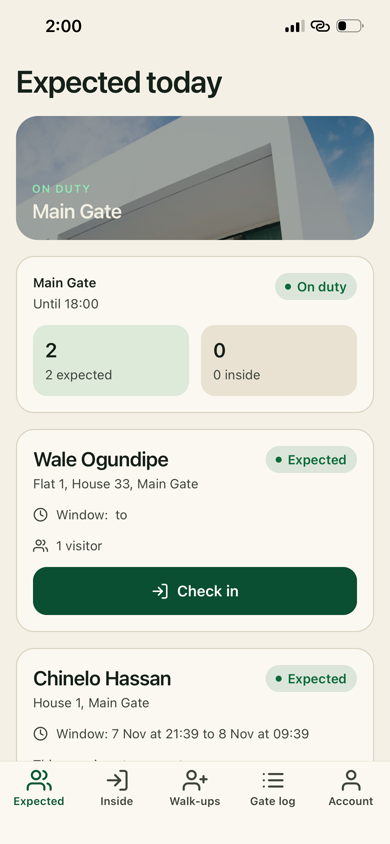
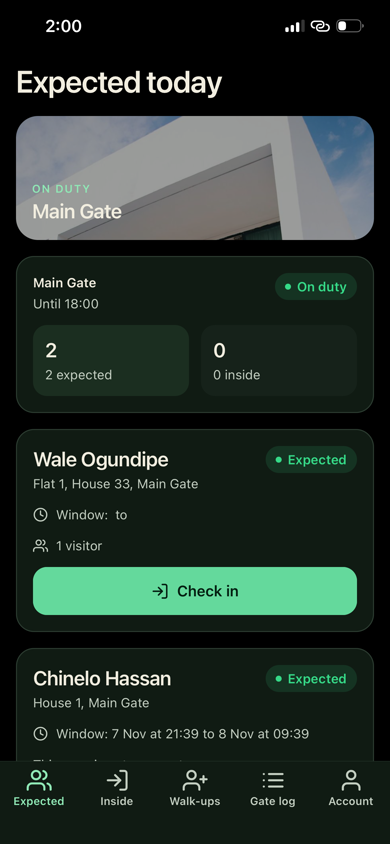
For guards
The expected party, the host and the unit, for the gates you cover. Ask for the PIN, check the party in, and log a walk-up with what happened.
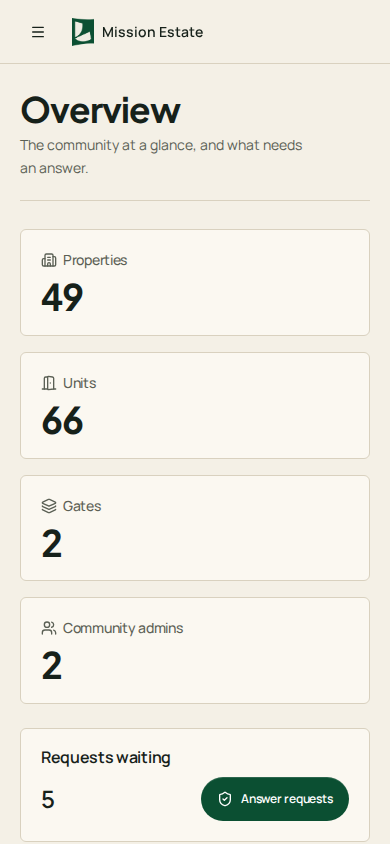
For administrators
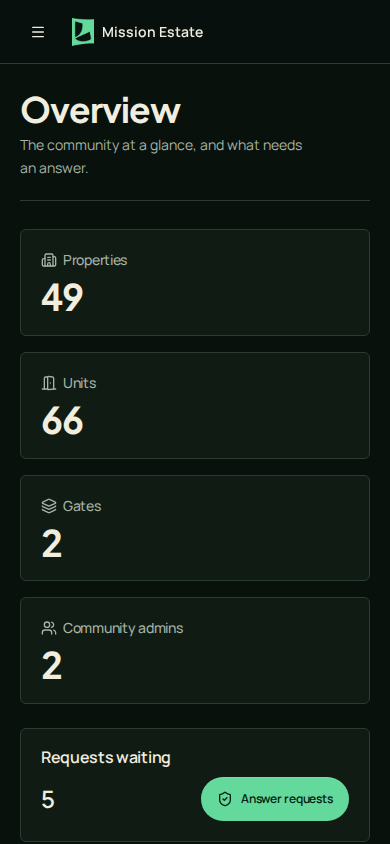
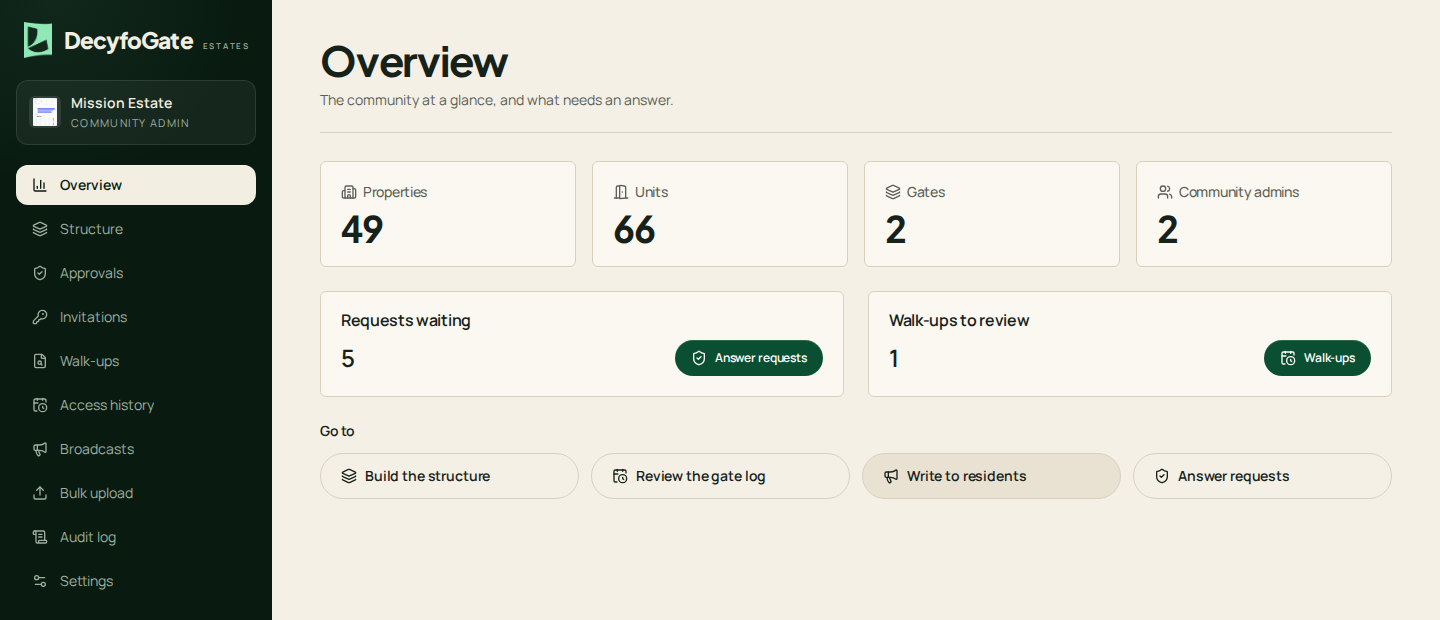
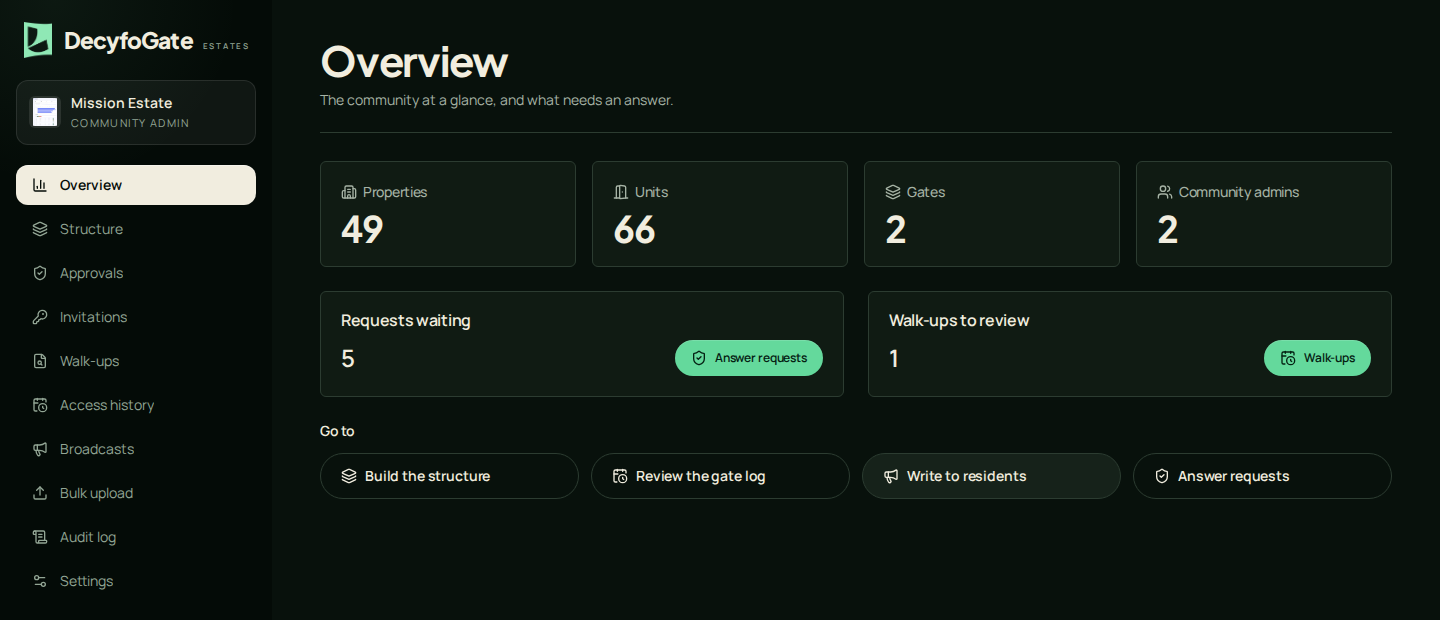
Zones, streets, properties, units, gates and guards. Approvals, invitations, access history, walk-up review and broadcasts.
Inside the console
The community structure, the approvals and the gate record in one place, on a laptop at the gate or in the office.

The visitor is expected. The guard has the details. The resident has the record. A calmer gate, from the first pass to the last check-out.
The work of running a gate, arranged so a resident, a guard and an administrator each see their own part.
One visit or a recurring routine, with a QR code, a six digit PIN and a share link.
Family members and household personnel, with one-time codes to sign in.
An owner or caretaker decides a tenant claim, and the administrator sees the record.
Every gate event, with a date range and a vehicle plate search.
What the guard decided at the gate, flagged for the administrator to review.
A message to the whole community, a street or one unit, counted before it is sent.
The platform was built with the isolation rules a community needs, and the record to answer for what happened.
The estate record and the person stay connected, without a paper book at the gate.
A walk through the resident, guard and administrator screens using Mission Estate, a fictional community stocked with realistic homes, residents and visitor history.